
Last updated November 22, 2026
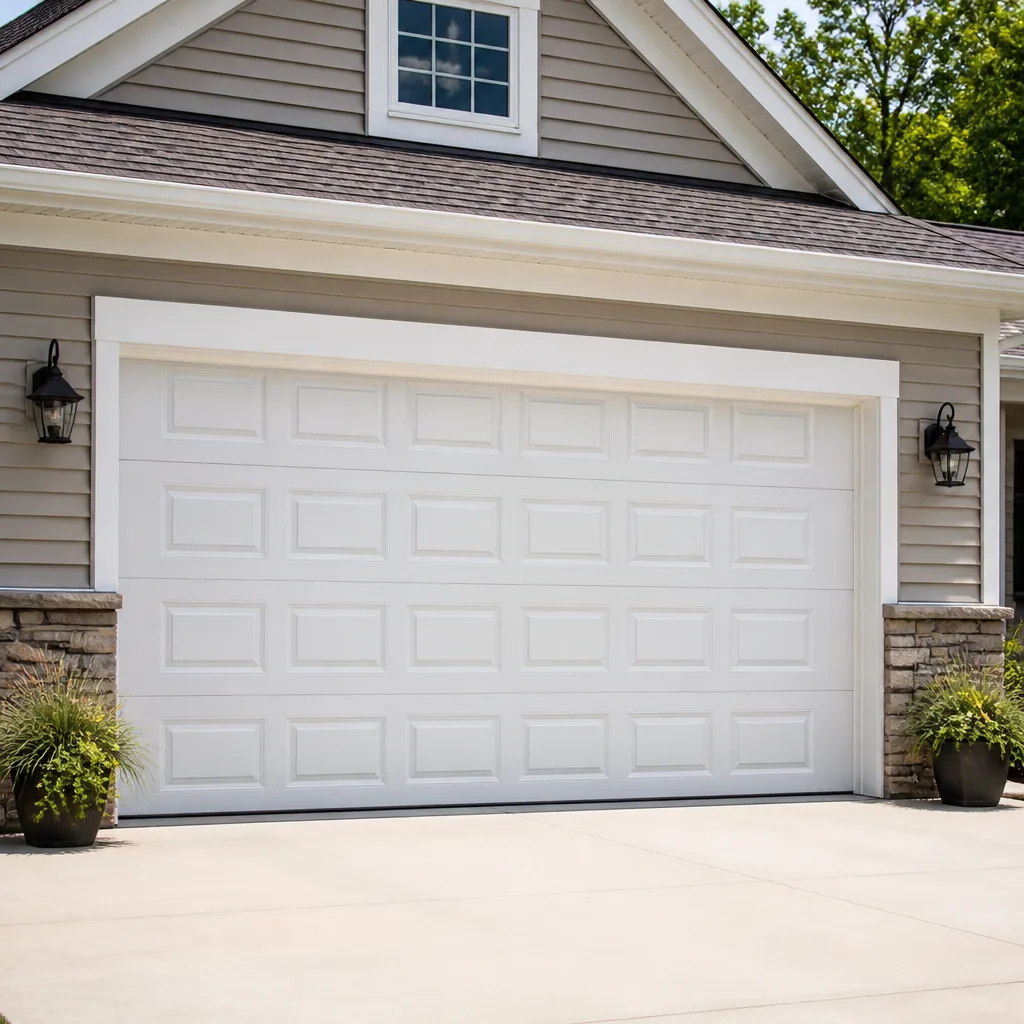 Raised-panel steel
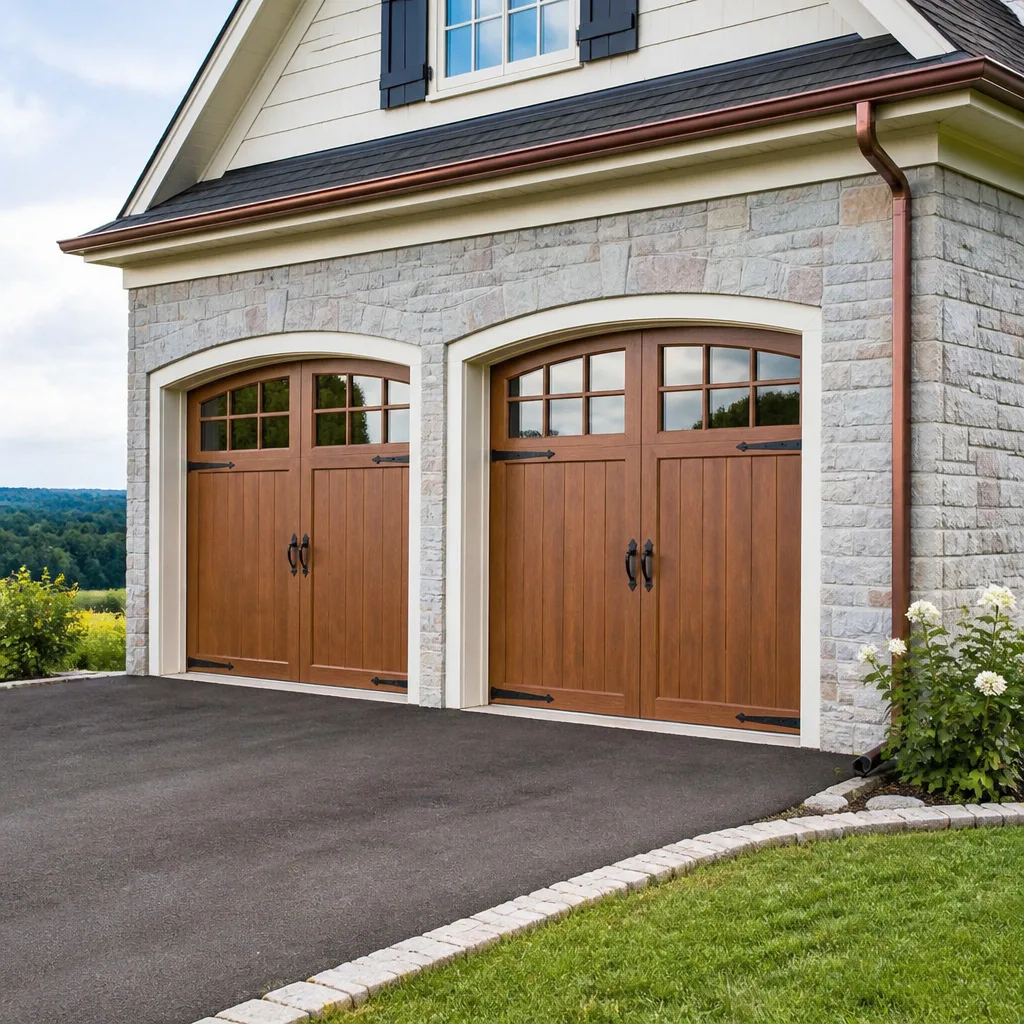 Carriage house
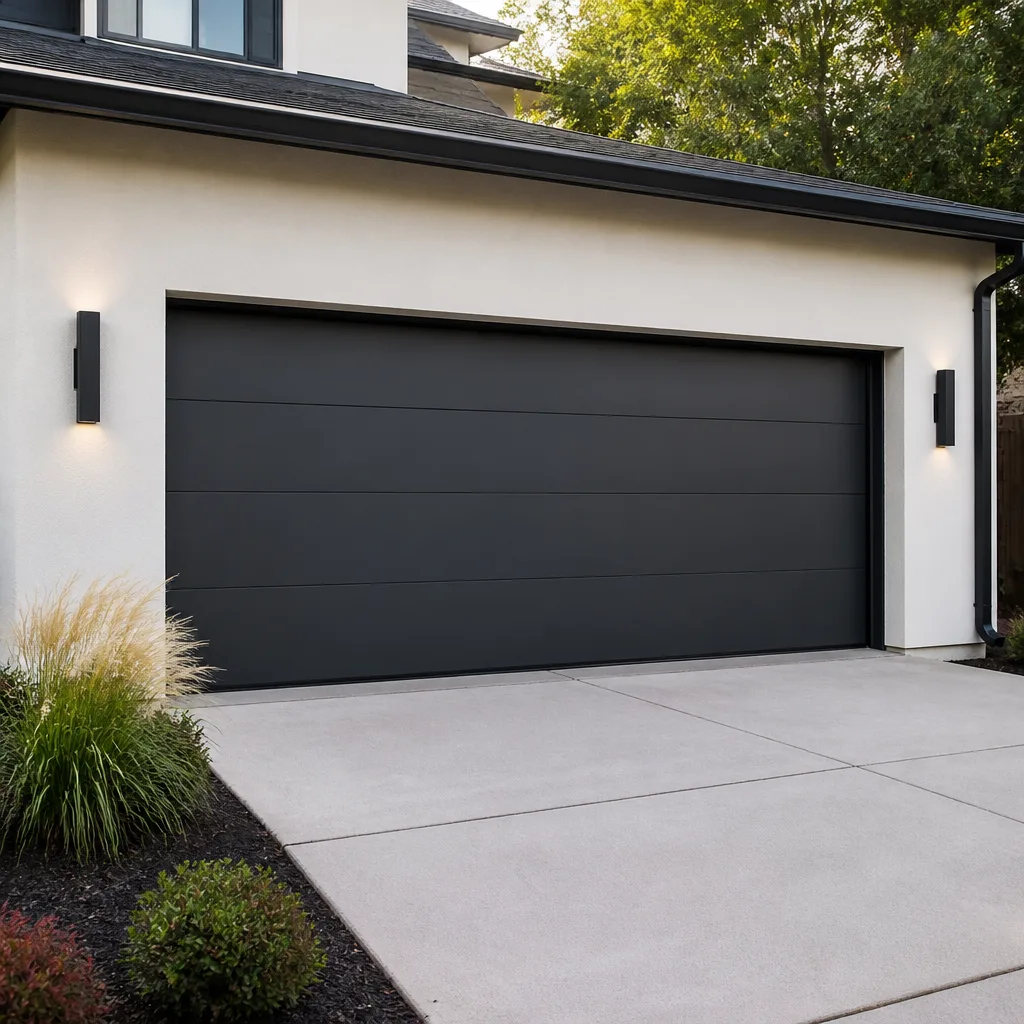 Modern flush
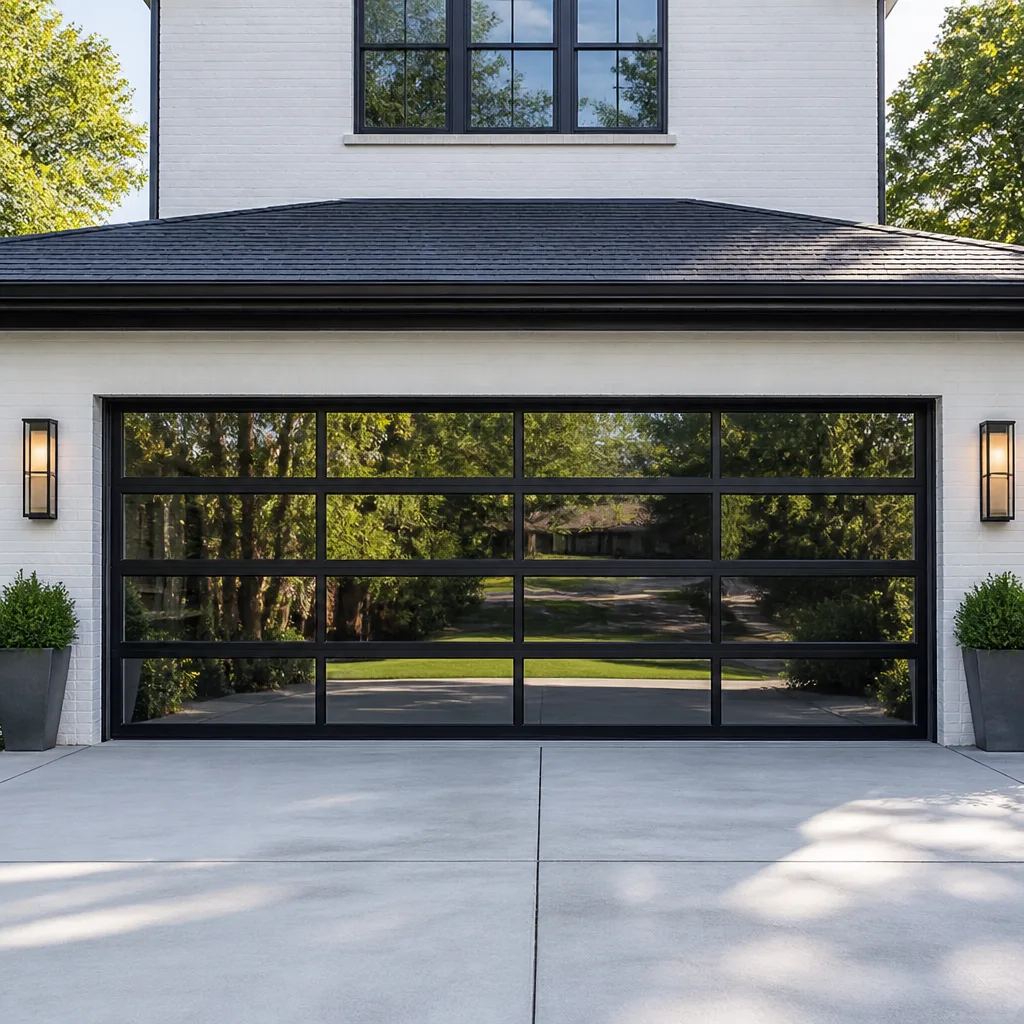 Full-view glass
 LiftMaster openers
 Chamberlain openers
Full 25-point door and opener safety check with every visit - springs, cables, rollers, tracks, and your LiftMaster or Chamberlain opener included
You get a price before we start. It does not change when the pro arrives.
Get your free estimateGarage Door Warning Signs: A Pompano Beach Homeowner’s Reference Guide
Most garage doors that fail badly gave their owners weeks of notice. The door hesitated. A roller squeaked. The opener strained a little harder than it used to. Homeowners in Pompano Beach tend to read those signals as “it’s just getting old” and keep pressing the button, because nobody ever told them which symptoms are cosmetic and which mean the door is one cycle away from coming down on a car or a person. That distinction is the whole point of this guide. We’re going to separate the nuisance noises from the safety emergencies so you can triage your own door: what can wait, what you should book this week, and what means stop using the door and call tonight.
Quick Answer
A garage door is sending a warning sign any time it hesitates, reverses without a clear obstruction, grinds, squeals, pops, or shows bent track, frayed cable, or cracked panels – and the urgent ones are anything affecting balance, springs, or cables, because those failures happen fast and can cause serious injury. Ignore cosmetic wear and schedule routine repairs, but stop using the door immediately if you hear a pop from overhead, see a gap in a spring, or notice the door hanging crooked. Every one of those situations is fixable, and a trained technician can tell you within minutes which tier you’re in.
Styles & brands we work with
- Raised-panel steel
- Carriage house
- Modern flush
- Full-view glass
- LiftMaster openers
- Chamberlain openers
Table of Contents
- The Three-Tier Urgency System
- Warning Signs Specific to Pompano Beach Homes
- What Each Sound Actually Means
- A Visual Inspection You Can Do in Five Minutes
- When a “Working” Door Is Still Dangerous
- Safety Sensor and Opener Warning Signs
- What You Should Never Attempt Yourself
- What Warning-Sign Repairs Typically Cost in Pompano Beach
The Three-Tier Urgency System
Not every symptom deserves the same reaction, and treating them all like emergencies is how people waste money and panic. We sort what homeowners describe into three tiers. Understanding which one your door is in is the single most useful thing you can take from this guide, because it tells you whether to call us now or put it on next week’s list.
Tier one: cosmetic, watch it. These are the quirks that bother you but don’t affect how the door functions or how safe it is. Weatherstripping that’s pulling away from the frame. Scuffed paint on the panels. A slightly loose handle. A photo-eye lens with dust on it. None of these will hurt anyone, and none of them indicate a mechanism about to let go. Note them, address them eventually, but don’t lose sleep.
Tier two: schedule-soon repairs. Something in the mechanism has changed, and while it isn’t dangerous today, it’s degrading. A single roller grinding as it rolls through the curve of the track. The opener motor sounding louder than it used to. A door that takes a beat longer to start lifting. A remote that now works only from a few feet away. These are signs a component is wearing down, and worn components fail on their own schedule, not yours. Book a repair before the failure chooses your worst day.
Tier three: stop using the door. The mechanism is compromised, and continuing to cycle it risks injury or damage. A spring with a visible gap. A door that goes up crooked. A cable that’s frayed or hanging loose. A loud pop followed by the door no longer balancing. A door that free-falls or slams shut. In these cases the door is now heavier than the lifting mechanism was designed to handle, and the safest move is to keep it closed, keep everyone clear, and call a professional.
Here’s the triage in list form, so you can match what you’re seeing to what to do:
- Watch it: weatherstripping, cosmetic dents, faded paint, remote battery.
- Book it: grinding or squeaking, slow starts, drifting remotes, minor alignment, loosening track.
- Stop now: broken spring, frayed or slack cable, crooked door, sudden pop, door that won’t hold position halfway open.
If you’re not sure which tier you’re in, that uncertainty is itself a good reason to call. When the door won’t move, we do, and the fastest way to resolve the question is a quick conversation with someone who works on these doors every day.
Warning Signs Specific to Pompano Beach Homes
Pompano Beach sits in a climate that ages garage door hardware a little differently than a lot of the country. Two things happen here more than inland homeowners expect: heat and humidity, and a stretch of strong summer weather that puts the whole system under stress. If your door has been up for a handful of years, you’ll start seeing an orange-brown film or rust streaks on the springs, pitting on the rollers, and weatherstrip that’s shrunk back from the frame. Those are the coastal-era warning signs worth watching for.
Rust streaks on the torsion springs. The springs over your door are under heavy load and are the component most sensitive to humidity. When you see rust running down the coil, it’s a signal that the spring’s surface is degrading, and a spring that’s been compromised by corrosion is more likely to fail suddenly rather than stretch gracefully. Rust isn’t an automatic replacement, but it’s worth having checked.
Salt-pitted rollers. The small steel rollers that ride inside the track are exposed to the same humid air, and they pit and seize before they wear out. A seized roller drags instead of rolling, which puts extra strain on the opener and the panels. If your rollers feel gritty or won’t spin freely by hand, that’s the sign.
Weatherstrip shrinkage from UV. The rubber or vinyl seal along the bottom and sides of the door takes full sun and, over time, dries, hardens, and pulls away. That opens a gap that lets in water, insects, and heat. New weatherstrip is one of the least expensive fixes on a Pompano Beach door and one of the easiest to put off too long.
We work on the brands you already have – LiftMaster, Chamberlain, Genie, Clopay, Amarr, Wayne Dalton, Craftsman, and Raynor – so when we inspect a Pompano Beach door, we’re reading the specific hardware that’s actually installed on it, not a generic checklist. The rust pattern on a Clopay spring and the wear on a Wayne Dalton panel tell you different things, and knowing the difference is where experience matters.
What Each Sound Actually Means
Your door makes noise every time it moves, and those noises are mechanical information. A new noise, or a noise that’s gotten louder over weeks, is the door telling you which part is struggling. Here’s how to translate what you’re hearing.
- Grinding. Usually a roller that’s seized and dragging through the track, or a track that’s out of alignment and rubbing the door. Grinding wears down the roller and stresses the opener motor, so it’s a schedule-soon symptom.
- Squealing. A dry hinge, a worn roller, or a torsion spring that’s lost its lubrication. Squealing alone rarely means danger, but persistent squealing often means the door is running under more friction than it should, which will eventually wear out the opener.
- Popping. A sharp pop from overhead is the sound to take seriously. It’s often a torsion spring snapping, or the cable slipping off the drum. If you hear a pop and the door suddenly feels unbalanced or heavy, stop using it and call – the lifting mechanism is now compromised.
- Rattling. Loose brackets, a bolt vibrating free, or a panel that’s come slightly unfastened. Rattling is typically a schedule-soon repair, because a loose bracket can work its way out entirely.
- Straining motor. Not a noise exactly, but the sound of the opener working harder than it used to. That usually means the door is out of balance and the motor is compensating. Left alone, the opener motor will eventually burn out, and that’s a bigger repair than balancing the door would have been.
If sound is the only symptom and the door still moves smoothly, you can schedule it. If sound arrives with a sudden change in how the door feels or moves, treat it as tier three and stop cycling the door until someone looks at it.
A Visual Inspection You Can Do in Five Minutes
You don’t need to be a technician to catch most of the warning signs ahead of time. Five minutes, a flashlight, and your eyes are enough to spot the visible ones. What you’re looking for is change – something that looks different than it did a few months ago.
- Look at the springs. From the ground, with the door closed, shine a light on the springs above the door. You’re looking for rust streaks, a visible gap in the coil, or a spring that looks lopsided. A gap or a gap that appears suddenly means the spring has broken – stop here and call.
- Check the cables. The cables run from the bottom corners of the door up to the spring system. You’re looking for fraying, rust, or slack. A cable that’s visibly frayed or hanging loose is a stop-using-the-door situation.
- Inspect the track. Walk the length of each track on both sides. Look for dents, bends, or sections that have pulled away from the door frame. A bent track will cause the door to bind, and binding puts stress on every other component.
- Scan the panels. Check for cracks, especially near the hinges and the bottom edge. A cracked panel is a structural problem – it may not fail tomorrow, but it can’t be repaired indefinitely, and it’s a sign the door is under more stress than it should be.
- Look at the hardware. Track brackets, hinges, and rollers should be tight and intact. If anything is loose or missing, that’s a schedule-soon repair.
- Check the balance. With the door closed, pull the emergency release so the door is disconnected from the opener, then lift it about halfway and let go. A properly balanced door holds its position. If it drifts up or slams down, the spring balance is off and you should call.
That last step is the one most homeowners skip, and it’s the most revealing. It’s also the only one to do carefully – do it with the door disconnected and keep your hands clear of the moving parts. Never touch a spring or a cable while you’re doing it. Those parts are under enough tension to cause serious injury, and that’s a job for a trained professional, not a weekend project.
When a “Working” Door Is Still Dangerous
Here’s the scenario that catches people. The door goes up. The door comes down. Everything seems fine, so it seems safe. But a door that lifts and lowers smoothly can be a single cycle away from a serious failure, because the components that carry the load – the torsion springs and the cables – wear out quietly while the door keeps working.
Open torsion springs have a limited number of cycles in them, and that limit doesn’t announce itself with a warning beep. As the spring weakens, the opener does more of the lifting work. The door still moves, so nothing seems wrong. But the spring is closer to snapping than it was last week, and when it snaps, the door loses its balance and can come down hard. In our experience, the doors people describe as “working fine but a little noisy” are sometimes the ones with springs that are on their last legs.
So how do you tell a working door that’s actually fine from one that’s working but not for long? Look for the subtle signals. The door gets slower to start. The opener seems to pause before it moves. The door sags slightly on one side when it’s halfway up. The motor area is warmer than it used to be. Any of those mean the system is compensating for wear.
This is one reason we treat spring work as a dedicated service rather than something folded into a general tune-up. Spring repair done safely, the first time, means the technician identifies which spring is stressed, whether the pair is matched, and whether the door’s balance is actually restored – not just that the door goes up and down again. A matched pair of springs is almost always replaced together, so if you’re quoted for a pair, the price reflects two springs.
If you’ve been watching your door work for weeks and something nags at you about how it moves, that nagging is worth acting on. It’s the reason this guide exists.
Safety Sensor and Opener Warning Signs
Some of the most common “door won’t close” problems aren’t about the door at all – they’re about the opener and its safety sensors. The two small lenses at the bottom corners of the frame are a photo-eye safety system, and their whole job is to stop the door from closing on a car, a pet, or a person. When they’re misaligned, dirty, or blocked, the door’s logic board flags it, and the door reverses instead of closing. That hesitation before the door closes isn’t the door “getting old.” It’s often a sensor telling the motor it can’t verify the path is clear.
Here are the opener-side warning signs worth knowing:
- Door reverses before it finishes closing. Usually a sensor misalignment or an obstruction. Check for debris, spider webs, or a lens that’s been knocked out of line.
- Door reverses on the way up. Often a sign the door is out of balance or binding in the track. The opener is detecting resistance and treating it as an obstruction.
- Remote works only up close, or not at all. Dead battery first, but if the battery’s new, it can be interference or a lock-out on the opener.
- Blinking light on the opener. Every model uses its blink pattern to report a fault. A Genie or a Chamberlain will blink in different sequences, and that pattern is diagnostic.
- Door won’t move at all, and the opener clicks. Could be the logic board, a failed capacitor, or a stripped drive gear. This is where brand familiarity helps – a Chamberlain/myQ opener and a LiftMaster work slightly differently, and diagnosing the actual fault is faster than guessing.
We work on LiftMaster and Chamberlain more than any other two brands, simply because they’re the most widely installed, and they’re also the two most homeowners ask about when they have smart-home integration questions. If your opener is on the myQ ecosystem or connected to a home app, that connection can also cause behavior that looks like a fault. Knowing where to look is most of the job. If you want us to look, our garage door opener repair service covers this ground every week in Pompano Beach.
What You Should Never Attempt Yourself
We’ll be direct about this because it matters more than anything else in the guide. Garage door springs and cables are under high tension, and a spring that lets go while you’re working on it can cause severe injury. The same goes for the cables, the torsion tube, and the bottom brackets. This is not the kind of repair where “I watched a video” is a reasonable starting point.
The safe division of labor looks like this: you can inspect visually, you can clear obstructions, you can replace the batteries in your remotes and keypads, you can clean the photo-eye lenses, and you can lubricate hinges and rollers with the right garage door lubricant. Everything involving the springs, cables, torsion tube, bottom brackets, or the track brackets that hold the door up is a technician’s job. So is any repair where the door is crooked, unbalanced, or off its track.
If the door is stuck open and you can’t close it, don’t force it. Keep people and pets clear, and call. That’s exactly the situation our emergency garage door service exists for. We answer 24/7. Fast dispatch from 7am to 7pm.
What Warning-Sign Repairs Typically Cost in Pompano Beach
The cost of a repair depends on which tier you’re in, and the range is wide because the problems are different. Here’s the honest picture of what repairs in this market typically look like, so you can plan. The written estimate sets the final price, and we give you that number before any work starts, so there are no surprises when the invoice is written.
- Weatherstripping replacement: typically a low-cost, quick fix; priced per job once the door width is measured.
- Roller and hinge replacement: usually a modest repair, more if multiple rollers are seized.
- Track realignment: moderate, since it requires rebalancing the door afterward.
- Single torsion spring replacement: a mid-range repair; a matched pair costs about twice that, and pairs are usually replaced together.
- Cable replacement: comparable to spring work, since the two systems are handled together.
- Opener logic board or drive gear repair: varies by brand; diagnosed before we quote.
- New door installation: a larger project; measured and quoted in advance, not a same-day job.
If you’re looking at a panel that’s cracked beyond repair, replacing the door may be the smarter path, which is why our garage door installation work covers the full replacement when a repair isn’t worth it. Most homes we see in Pompano Beach don’t need a full replacement, and we’ll tell you when they do and when they don’t. From opener to panel, one call covers it all.
Common Mistakes to Avoid
- Ignoring a single pop. A pop from overhead is often a spring that’s just snapped. If you keep cycling the door afterward, you’re asking the opener to lift a door its spring no longer balances, and that can damage the opener or bring the door down. Stop using the door and call.
- Assuming a noisy door is just old. Noise is mechanical information. Grinding, squealing, and rattling each point to a specific part. Treating them as background noise lets a small repair turn into a bigger one. In our experience, the “it’s been like that for months” doors are often the ones with seized rollers or out-of-balance springs.
- Overriding the safety sensors. Homeowners sometimes defeat the photo-eye or push a blocked sensor out of the way to get the door to close. Those sensors exist to stop the door on a car or a person, and defeating them removes the only thing between the door and a bad outcome. Fix the sensor, don’t bypass it.
- Trying to fix a bent track with a hammer. A bent track is a sign the door is binding, and a track that’s been hammered back into “close enough” shape will bind again, faster. The door also needs rebalancing afterward, which isn’t a hammer job. This is a technician repair.
- Replacing a whole door when a repair would do. A cracked panel, a snapped spring, or a failing opener doesn’t automatically mean new door. We look at what’s actually worn and quote the repair, not a replacement you don’t need. Built for your door, not ours.
- Putting off weatherstrip in Pompano Beach. The bottom seal takes full sun, and it dries and shrinks faster here than in cooler climates. A gap in the weatherstrip lets water and insects in, and it’s one of the least expensive fixes on the list. A delayed fix costs more in the long run.
- Assuming a working door is a safe door. A door that opens and closes on command can still have a spring close to failing. If a professional hasn’t looked at the springs and balance in a long time, have it checked. The failure happens fast and doesn’t announce itself.
See the difference
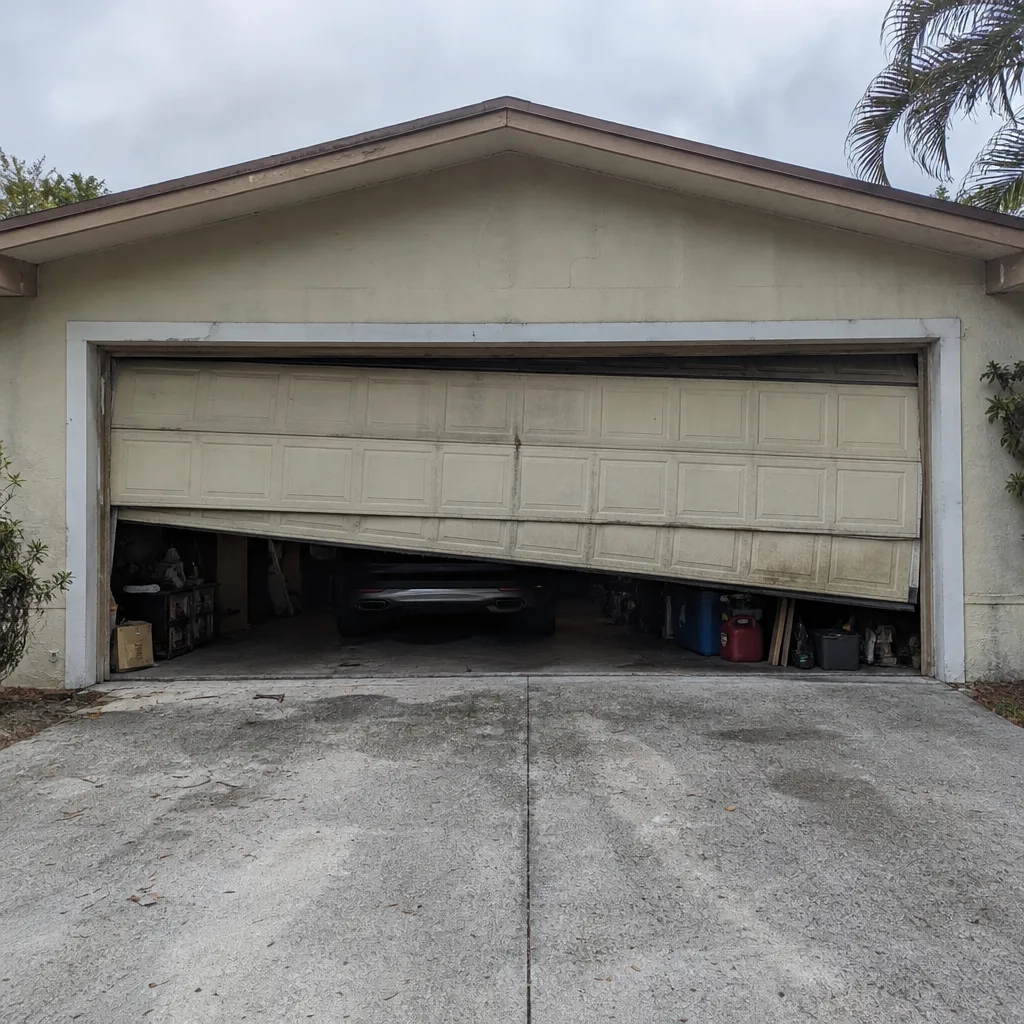 Before
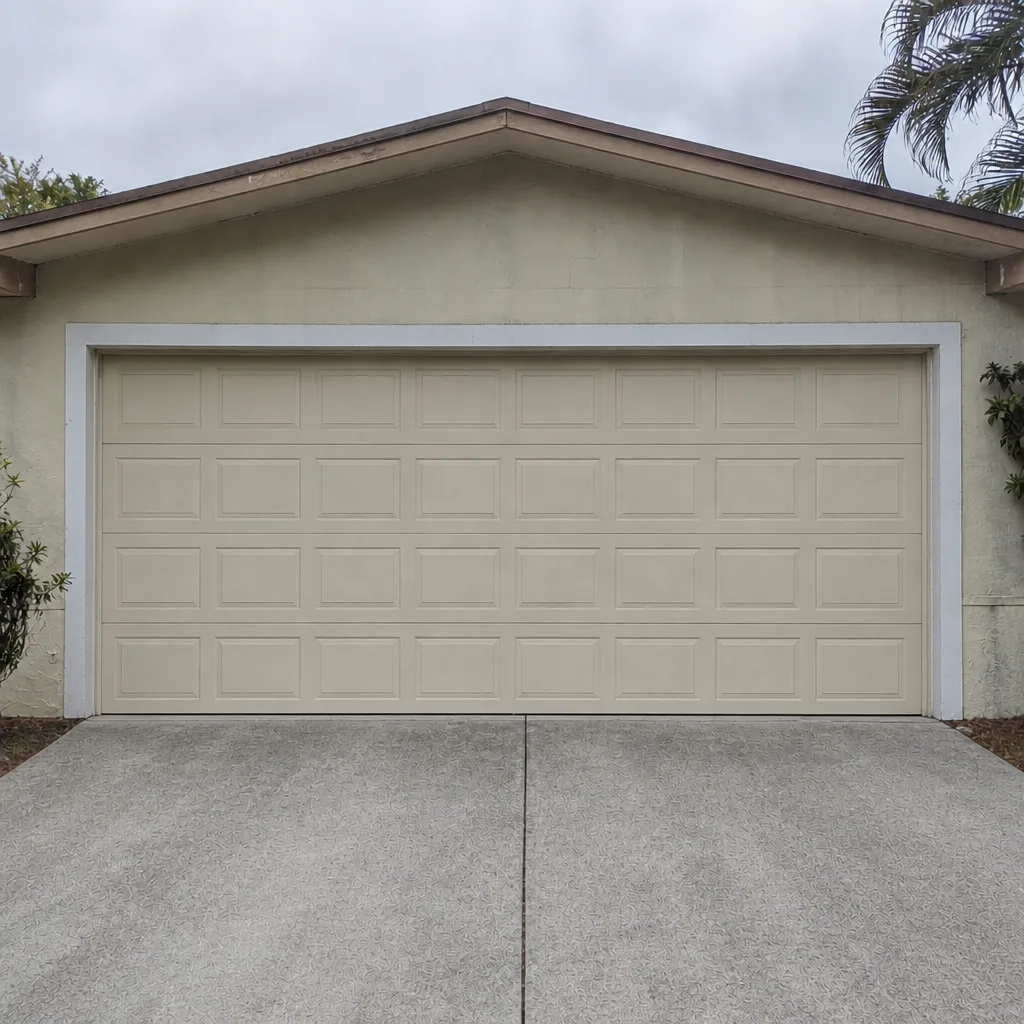 After
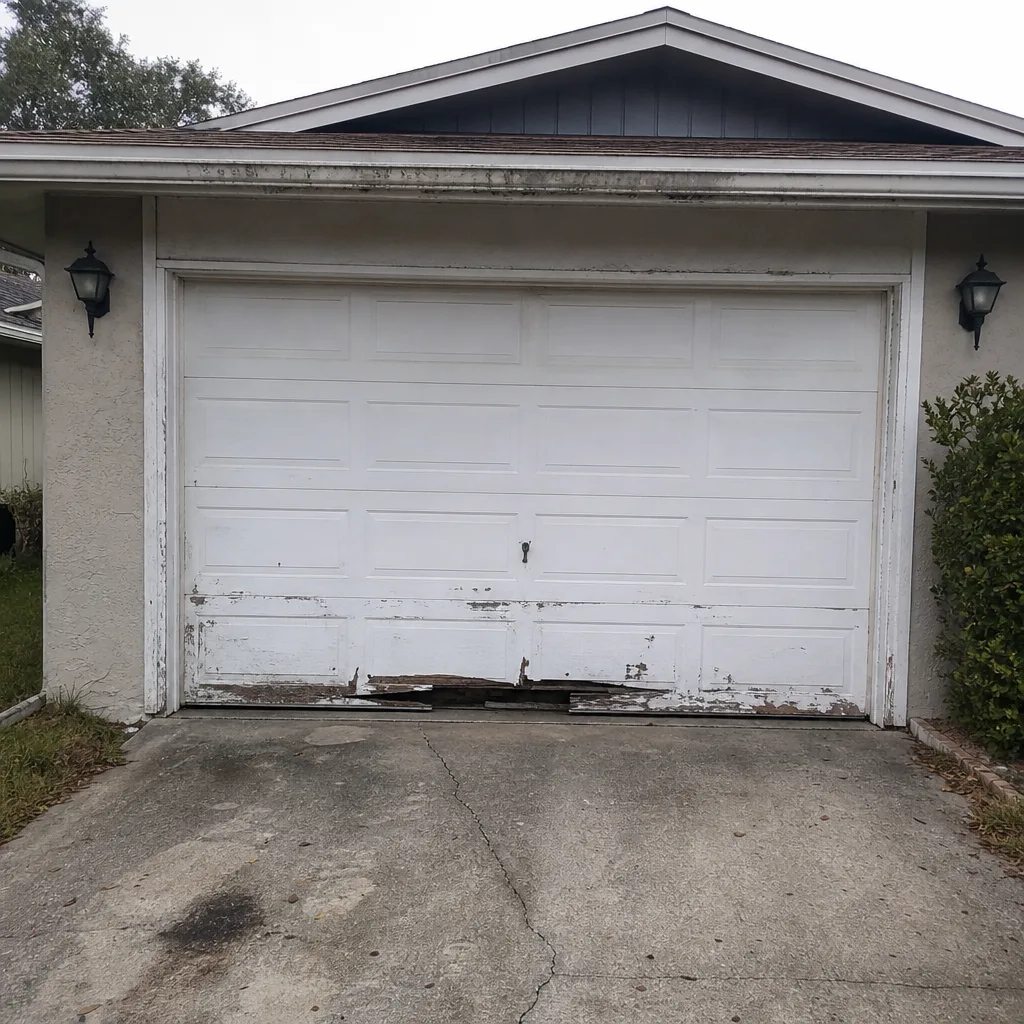 Before
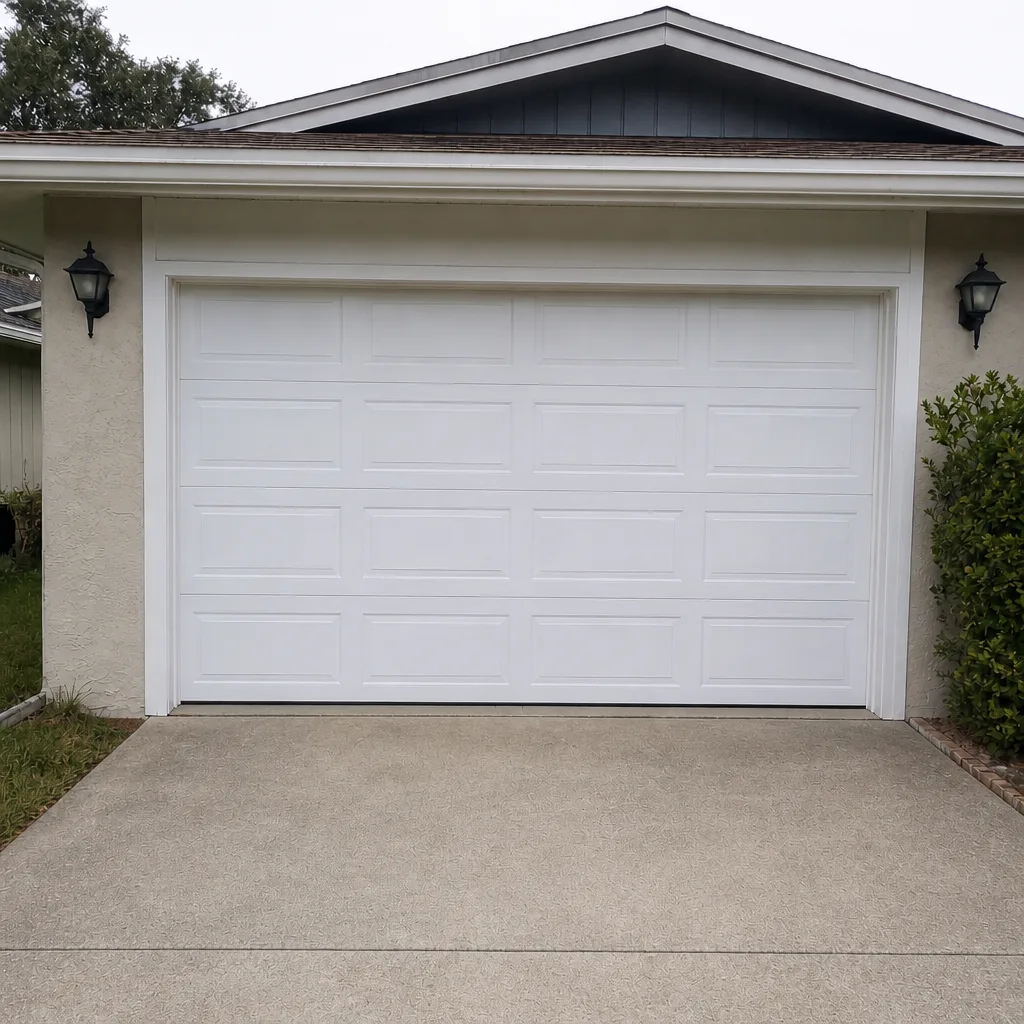 After
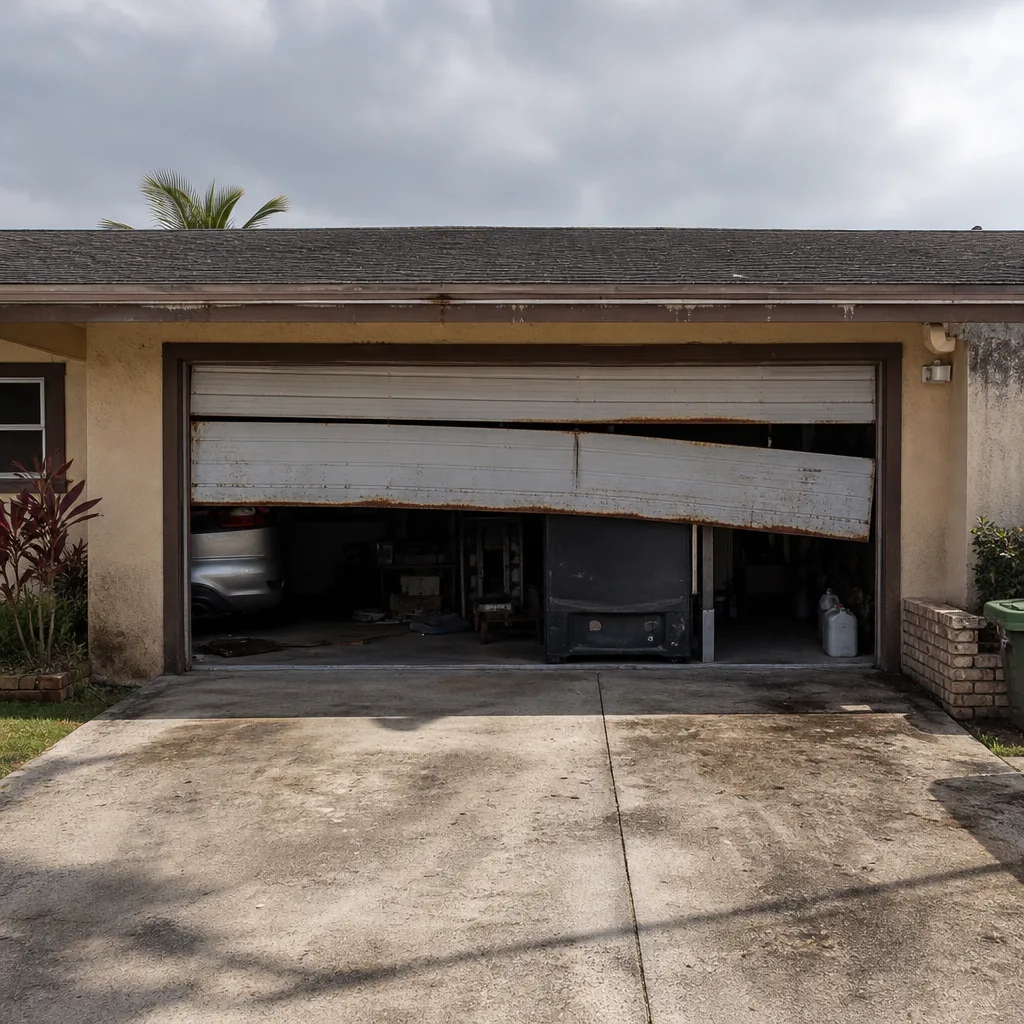 Before
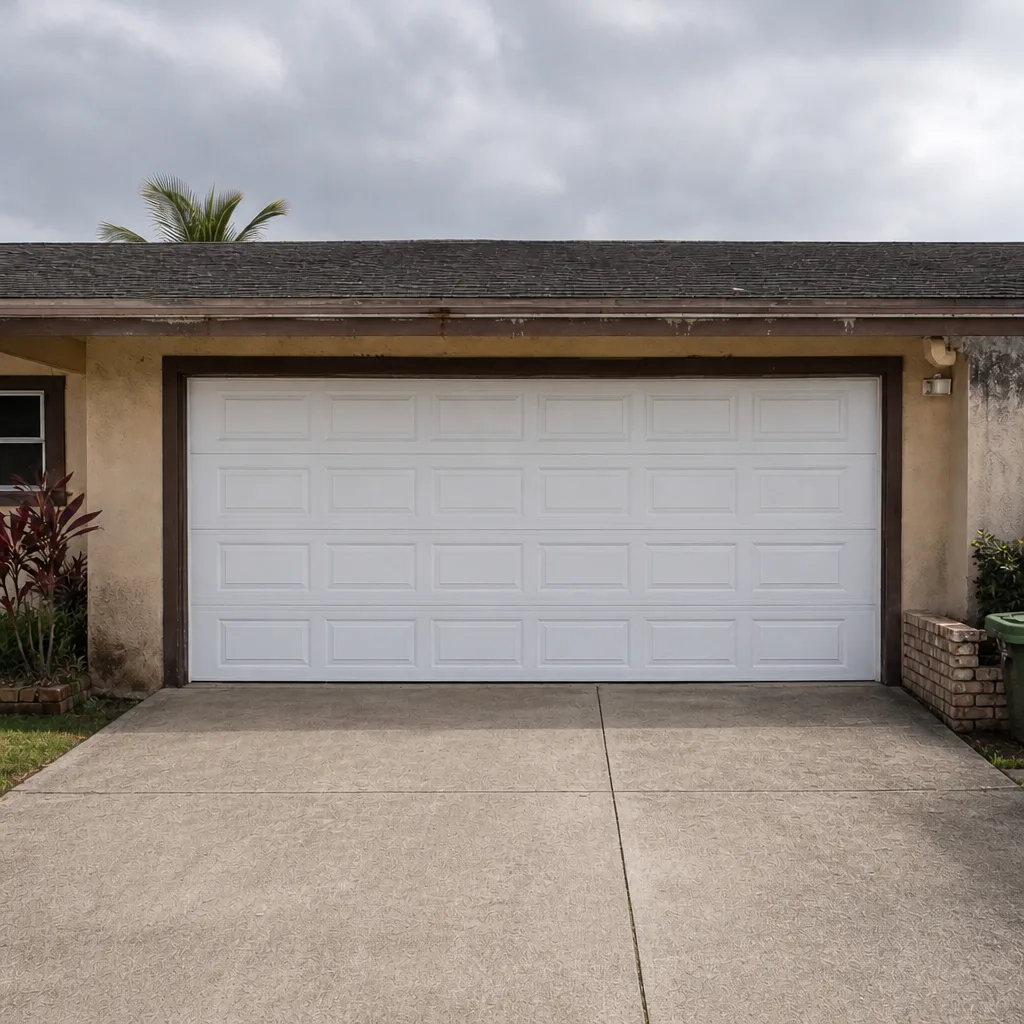 After
When to Call a Professional
Call a professional any time the door goes crooked, a spring shows a gap, a cable frays, you hear a pop, the door slams or free-falls, or the door won’t hold its position halfway up. Call if the opener reverses without a clear obstruction, or if the door binds in the track. Call if you’ve simply never had the springs inspected and the door has been working for years with no service. These are all situations where an experienced technician reading the actual hardware saves you money and risk.
Pompano Beach Garage Door Repair Co offers free estimates in Pompano Beach – call (855) 658-4102. We answer 24/7. Fast dispatch from 7am to 7pm, Sunday through Friday. Our technicians have up to 8 years of experience, and they work on the brand you already have. For routine warning-sign repairs, we can also book a garage door repair visit and confirm the diagnosis before any work begins. The estimate is free, and the price is quoted and agreed before we start.
Frequently Asked Questions
The most common warning sign we see in Pompano Beach is a door that hesitates or reverses before it closes – usually a misaligned or dirty safety sensor, not a failing door. The second most common is rust on the torsion springs from the humidity. Both are fixable, and neither is a reason to replace the door. Call (855) 658-4102 for an exact quote – estimates are free.
Spring repair in Pompano Beach is a mid-range repair, priced per spring, and a matched pair costs about twice a single spring because pairs are usually replaced together. The exact price depends on your door and the spring size, and the written estimate sets the final price before any work starts. Call (855) 658-4102 for an exact quote – estimates are free.
Yes – same-day service is available for urgent situations like a door that won’t close or a broken spring, and we answer 24/7. A call outside dispatch hours is booked into the next opening, Sunday through Friday, 7am to 7pm, so you’ll have a confirmed time before you wait. For immediate help, call (855) 658-4102.
No – the price is quoted and agreed before any work starts, and the written estimate sets the final price. If we find something unexpected, we talk to you about it first rather than adding charges after the fact. Call (855) 658-4102 and we’ll walk you through the estimate at no charge.
The local professional we connect you with is licensed and insured as their state requires, and they work on the brand you already have. We’re factory-familiar with eight of the most widely installed brands, including Chamberlain, Genie, Clopay, and Amarr, so the technician knows your specific hardware. Call (855) 658-4102 to book a visit and confirm the details.
Yes, if it’s been a while since anyone looked at the springs and balance, because a door that opens and closes on command can still have a spring close to failing. The inspection is quick, and it’s a chance to catch the wear before it catches you. To book one in Pompano Beach, call (855) 658-4102. Estimates are free.
The Bottom Line
The message of this guide comes down to triage. Most garage door problems announce themselves well before they become dangerous, and the job is to read the signal and act at the right level. Weatherstripping and cosmetic wear can wait. Grinding, squealing, and slow starts should be booked soon. A pop, a broken spring, a frayed cable, or a crooked door means stop using it now. A working door can still be a dangerous door if its springs are worn, so if you don’t know the last time yours were checked, have someone look. We work on the brand you already have, from the opener to the panel, and we’ll tell you what needs fixing and what can wait. If your door is sending a signal you don’t understand, the fastest answer is a call.
For any of the warning signs in this guide – cosmetic, schedule-soon, or stop-now – reach out to Pompano Beach Garage Door Repair Co and get a straight answer from someone who works on these doors every day. Call (855) 658-4102 for a free estimate. We answer 24/7. Fast dispatch from 7am to 7pm, Sunday through Friday. And if your door is in tier three right now, stop using it and call us tonight.
Written by the team at Pompano Beach Garage Door Repair Co.